STUCCO PAINTING
Stucco Painting Across Saskatchewan
Stucco is on a lot of Regina and Saskatoon homes, and it cracks as the house moves and the seasons shift. We repair the cracks first, then coat with a breathable finish that bridges them.
No painting over open cracks. The repair is part of the job.
Free written quotes
Clear scope, zero surprises
Fully insured
WCB & liability covered
Clean, protected job sites
Drop cloths & daily vacuum
Serving 16 communities
Across all of Saskatchewan
WHAT'S INCLUDED
What Our Stucco Painting Includes

WHY IT MATTERS IN SASKATCHEWAN
Why Stucco Needs Crack Repair First
Stucco is common on Regina and Saskatoon homes, and it cracks. The house settles, and Saskatchewan freeze-thaw cycles open and close those cracks through the seasons. Paint over an open crack traps water behind the coat, and that water blisters and peels the finish. So the repair comes first.
We route and fill hairline and wider cracks, patch spalled areas, and let the repairs set before we prime. Then we coat with a breathable elastomeric or acrylic that bridges the fine cracks and stretches with the wall. A non-breathable coating traps moisture and fails, so the coating has to let vapour escape.
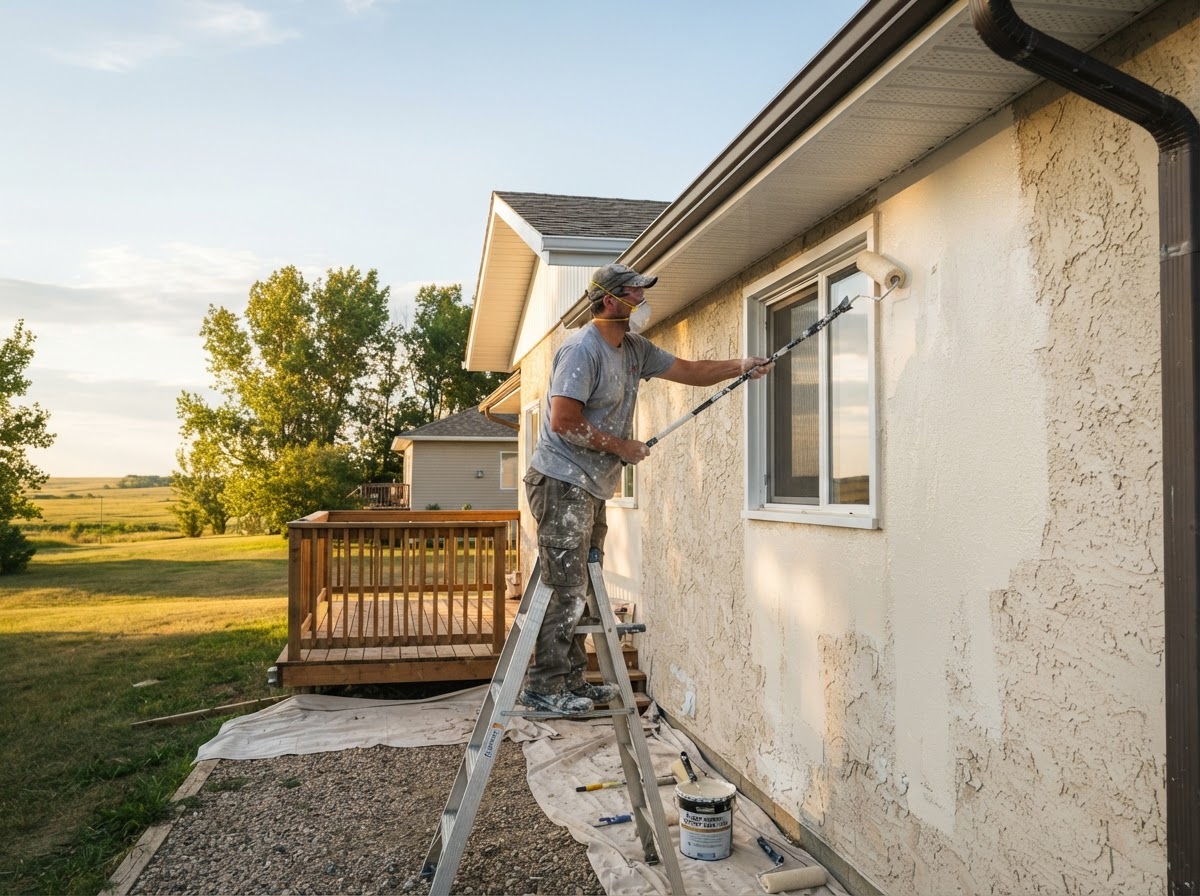
Stucco holds moisture longer than wood, so it has to be fully dry before coating, and the season is the same short late May to mid-September window. We pressure-wash off the chalky surface coat, prime the masonry, and apply two full coats back-rolled into the texture.
PROCESS
How Stucco Painting Works
Inspect and quote
We walk the stucco, map the cracks, and check for water damage and spalling. You get a written scope that includes crack repair before any coating goes on.
Clean and repair cracks
We pressure-wash the chalky surface, route and fill hairline and wider cracks, and patch spalled areas. Painting over open cracks traps water and makes them worse.
Prime and coat
We apply a masonry primer, then two coats of a breathable elastomeric or acrylic coating, back-rolled into the texture for adhesion and even coverage.
Walk-through and touch-ups
We walk the exterior with you, check coverage and crack bridging, touch up anything you flag, and remove masking and protection.
COATING OPTIONS
Elastomeric vs Acrylic for Stucco
Both are breathable. We pick based on how much crack bridging the wall needs.
| Coating | Best for | What to know |
|---|---|---|
| Elastomeric | Cracked stucco, masonry, concrete block | Bridges hairline cracks, stretches with the substrate, breathable so moisture escapes. The common choice for Saskatchewan stucco. |
| Premium masonry acrylic | Sound, well-maintained stucco | Lighter film build, good colour retention, breathable. Used when the stucco is in good shape and crack repair is minimal. |
SIGNS YOU NEED IT
When It Is Time to Paint Your Stucco
Hairline cracks
Stucco cracks as the house settles and through freeze-thaw cycles. Open cracks let water in behind the coat, so they get repaired before painting.
Chalky residue
If you run your hand along the wall and it comes up chalky, the surface coat is breaking down from UV and needs a fresh coating.
Faded or patchy colour
South and west stucco walls fade in the prairie sun. A recoat restores even colour and protects the substrate.
Water staining
Dark stains below windows or at grade mean water is sitting on or in the stucco. We find the source and repair before coating.
It has been 10 to 15 years
Stucco coatings last longer than wood paint, but they still break down. If it has been over a decade, it is time to assess.
PROJECTS
Recent Stucco Work
Stucco bungalow repaint in Regina
Crack repair and recoat in Saskatoon
Stucco and trim refresh in Moose Jaw
AREAS WE SERVE
Stucco Painting Across Saskatchewan
We paint stucco in every community we serve. Pick your city for local details and a free quote.
TESTIMONIALS
What Our Clients Say About Sask Painters
“Crew showed up on time, laid drop cloths, and finished our living room in two days. Clean cut lines, no mess left behind.”

Sarah M.
Homeowner · Regina
“They repainted the exterior of our bungalow before winter. The trim work alone made the house look brand new. Fair quote, zero surprises.”

Dave T.
Homeowner · Saskatoon
“Our kitchen cabinets look factory fresh. The degreasing and spraying gave a glassy finish. Glad we chose a pro over a weekend DIY.”

Nicole B.
Property Owner · Moose Jaw
FAQ
Stucco Painting Questions
Do you repair cracks before painting stucco?
Yes, always. We route and fill hairline and wider cracks, and patch spalled areas, before any coating goes on. Painting over open cracks traps moisture behind the coat and makes the damage worse. Crack repair is part of the scope, not an add-on.
What kind of paint do you use on stucco?
We use a breathable elastomeric or premium masonry acrylic. Elastomeric bridges hairline cracks and stretches with the substrate, which suits Saskatchewan freeze-thaw. The coating has to breathe, so moisture inside the wall can escape instead of blistering the paint.
Why does the coating need to be breathable?
Stucco and masonry hold and release moisture. A non-breathable coating traps that moisture inside, and it pushes the paint off as blisters and peeling. Breathable coatings let water vapour escape while still shedding liquid water from the surface.
Can you paint over chalky stucco?
Not directly. Chalky residue means the old surface coat is breaking down, and new paint will not bond to it. We pressure-wash to remove the chalk, then prime with a masonry primer so the new coating actually adheres.
When is the best time to paint stucco in Saskatchewan?
Late May through mid-September, when the surface is dry and temperatures stay above about 10°C during application and curing. Stucco holds moisture longer than wood, so we make sure it is fully dry before coating. Book early in the season.
Get a Free Quote
Tell us about your project. We reply within one business day.
Ready to Refresh Your Stucco?
Tell us about your walls, siding, or cabinets. We will provide a clean written quote within one business day. No pressure, no obligations.