DECK AND FENCE STAINING
Deck and Fence Staining Across Saskatchewan
Prairie sun, hail, and freeze-thaw break down wood fast. We clean, sand, and stain decks and fences with the right product for the exposure, in the short dry window.
Dry wood, the right stain, and a recoat plan so the wood does not go grey again.
Free written quotes
Clear scope, zero surprises
Fully insured
WCB & liability covered
Clean, protected job sites
Drop cloths & daily vacuum
Serving 16 communities
Across all of Saskatchewan
WHAT'S INCLUDED
What Our Deck and Fence Staining Includes
WHY IT MATTERS IN SASKATCHEWAN
Why Wood Fails Fast on the Prairies
A deck in Saskatchewan takes intense summer UV on horizontal boards, hail and wind that rough up the surface, and freeze-thaw cycles that lift the grain and open checks. Left unprotected, the wood goes grey, then splits. Stain is what keeps that from happening.
The wood has to be dry before any stain goes on. Stain over wet wood traps moisture and peels, so we test moisture content first. The season is short, roughly late May through mid-September, and we need a stretch of dry days for the stain to soak in and cure.
We match the stain to the wood and its exposure. A cedar deck in full sun takes a different product than a shaded pine fence. And we give you a recoat plan, because the stain that lasts is the one that gets refreshed before the wood goes grey again.
PROCESS
How Deck and Fence Staining Works
Inspect and quote
We check the wood condition, look for rot, and test moisture content. Stain over wet wood fails, so we confirm the surface is dry enough before we quote.
Clean and brighten
We clean off grey, weathered fibre and brighten the wood so the stain penetrates. Sanding knocks down splinters and raised grain from winter.
Stain
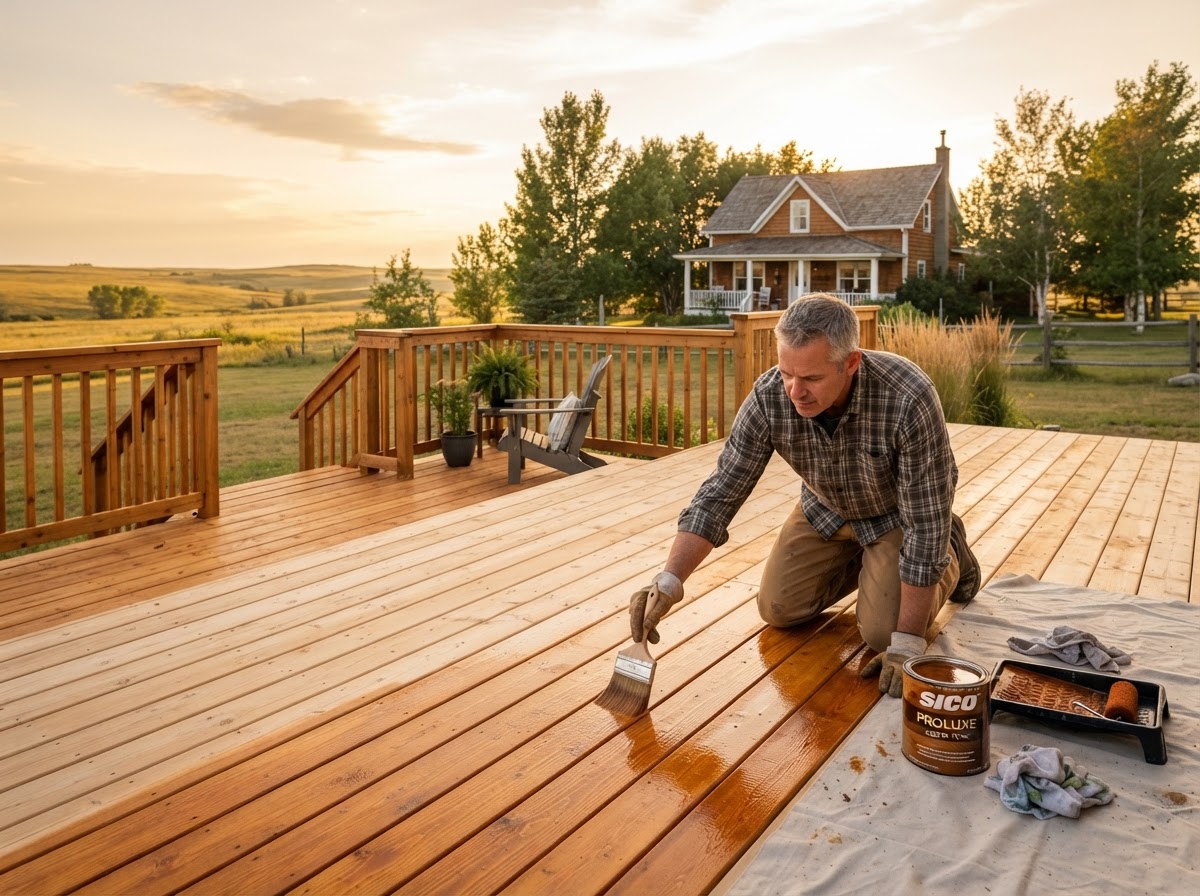
We apply a penetrating oil or solid stain matched to the wood and its sun exposure, working in the dry window so it soaks in and cures.
Walk-through and recoat plan
We walk the deck with you, flag any boards that need replacing, and tell you when the next recoat is due so the wood does not go grey again.
STAIN TYPES
Choosing the Right Stain
More pigment means more protection and less visible grain. Here is how we choose.
| Stain | Best for | What to know |
|---|---|---|
| Transparent | New cedar, wood you want to show | Most natural look, least pigment. Fades fastest in prairie UV and needs the most frequent recoat. |
| Semi-transparent | Most decks, balanced look | Some pigment for UV protection, still shows grain. The common choice for Saskatchewan decks. |
| Solid | Older, weathered, or pine decks | Most protection and coverage, hides grey wood. Reads more like paint than stain. |
SIGNS YOU NEED IT
When It Is Time to Stain
Grey or silver wood
UV exposure breaks down wood fibre and turns it grey. Once it silver, the surface is breaking down and needs stain before it checks and splits.
Water soaks in instantly
If water disappears into the board instead of beading, the old stain is gone and the wood is unprotected. It is time to recoat.
Splinters and raised grain
Winter freeze-thaw lifts the grain and makes boards splinter. Sanding and staining smooth and seal the surface.
Hail or wind damage
Prairie hail and wind wear down stain and rough up the surface. A recoat after a hard season restores protection.
It has been 2 to 4 years
Most deck stains in Saskatchewan last roughly that long on horizontal surfaces before UV and moisture break them down.
PROJECTS
Recent Deck and Fence Work
Cedar deck stain in a Saskatoon backyard
Pressure-treated deck refresh in Regina

Fence staining near Moose Jaw
AREAS WE SERVE
Deck and Fence Staining Across Saskatchewan
We stain decks and fences in every community we serve. Pick your city for local details and a free quote.
TESTIMONIALS
What Our Clients Say About Sask Painters
“Crew showed up on time, laid drop cloths, and finished our living room in two days. Clean cut lines, no mess left behind.”

Sarah M.
Homeowner · Regina
“They repainted the exterior of our bungalow before winter. The trim work alone made the house look brand new. Fair quote, zero surprises.”

Dave T.
Homeowner · Saskatoon
“Our kitchen cabinets look factory fresh. The degreasing and spraying gave a glassy finish. Glad we chose a pro over a weekend DIY.”

Nicole B.
Property Owner · Moose Jaw
FAQ
Deck and Fence Staining Questions
When should I stain my deck in Saskatchewan?
Late May through mid-September, when the wood is dry and the curing window is clear. Stain needs dry wood and a stretch of dry days to soak in and cure. We test moisture content before we start, because stain over wet wood peels.
How often does a deck need restaining?
Horizontal surfaces like deck boards usually need a recoat every 2 to 4 years in Saskatchewan, because they sit in full UV and hold standing water. Vertical fences last longer. We tell you when the next coat is due so the wood never goes grey.
Do you have to sand the whole deck?
We sand to knock down raised grain and splinters from winter, and to open the surface so stain penetrates. A full sand is not always needed, but we will not stain over a rough, grey surface, because the stain will not last.
What if my deck boards are rotting?
We flag rotted or cracked boards during the quote and can include board replacement in the scope. Stain will not save rotting wood, and coating over it hides a problem that gets worse. We tell you before we paint over it.
Transparent, semi-transparent, or solid stain?
Transparent shows the most wood but fades fastest in prairie UV. Semi-transparent is the common balance, with enough pigment for protection and visible grain. Solid hides grey or weathered wood and gives the most protection. We match the stain to the wood and its sun exposure.
Get a Free Quote
Tell us about your project. We reply within one business day.
Ready to Protect Your Deck or Fence?
Tell us about your walls, siding, or cabinets. We will provide a clean written quote within one business day. No pressure, no obligations.